The friend JeGx from Geeks3D has just published a test of an ASUS GeForce GTX 590 which exploits two GF110 clocked at 612 MHz instead of the 607 MHz recommended by NVIDIA. 3 GB of GDDR5, or 1.5 GB per GPU, are available and their frequency is 1710 MHz versus 1707 MHz by default. Image unavailable (removed by its host)For the rest, this graphics card follows the reference design; it has two blocks with a vapor chamber system and a large central 80 mm fan.
In any case, our colleague tested his tools on this card and pushed it to its limits to see what it had inside. The result of his findings is in the link below.
External content (video or audio) hidden: it sets its own cookies.
ASUS GTX 590 GPU Caps Viewer Details ASUS GTX 590 GPU Benchmarks
Test:
The testbed:
- CPU: Core i7 960 @ 3.2GHz
- RAM: 4GB DDR3 Corsair Dominator
- Motherboard: GIGABYTE X58-A UD5
- Windows 7 64-bit
- Graphics drivers: R280.26 WHQL
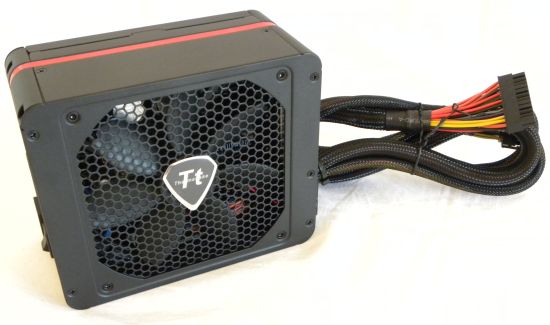
- PSU: Thermaltake Thoughpower Grand 850W FurMark 1.9.1 Settings: Preset 1080 (1920×1080 fullscreen, no AA, no postFX, 60sec, Burn-in mode).
Settings: 1920×1080 fullscreen, no AA, no postFX, 60sec, tessellation level: normal (16X).
36019 points (601 FPS) - ASUS ROG MATRIX GTX 580 (GPU@926MHz)
35890 points (598 FPS) - SAPPHIRE Radeon HD 6970 CrossFire (GPU@880MHz)
32666 points (545 FPS) - ASUS ENGTX580
30179 points (503 FPS) - MSI GeForce GTX 460 Cyclone SLI
25275 points (421 FPS) - ASUS GeForce GTX 590 (GPU@617MHz)
19398 points (323 FPS) - SAPPHIRE Radeon HD 6970 ASUS GTX 590 GPU Overclocking
To overclock the GTX 590, I used MSI Afterburner, because it allowed me to overclock both GPUs while I don't know why, ASUS GPU Tweak couldn't overclock one GPU. For this test, OC, I used 3DMark 11 (in Extreme mode) as well as Unigine Heaven 2 (D3D 11) to validate GPU overclocking. Overclocking is stable and both tests are correct.
L'ami JeGx de Geeks3D vient de publier un test d'une GeForce GTX 590 d'Asus qui exploite deux GF110 cadencés à 612 MHz en lieu et place des 607 MHz préconisés par NVIDIA. 3 Go de GDDR5, soit 1.5 Go par GPU, sont disponibles et leur fréquence est de 1710 MHz contre 1707 MHz par défaut.Pour le reste, cette carte graphique reprend le design de référence ; il est doté de deux blocs embarquant un système de chambre à vapeur et d'un large ventilateur central de 80 mm.
Toujours est-il que notre confrère a testé ses outils sur cette carte et l'a poussé dans ses derniers retranchements pour savoir ce qu'elle avait dans le ventre. Le résultat de ses trouvailles se trouve dans le lien ci-dessous.
External content (video or audio) hidden: it sets its own cookies.
ASUS GTX 590 GPU Caps Viewer Details ASUS GTX 590 GPU Benchmarks
Test:
The testbed:
- CPU: Core i7 960 @ 3.2GHz
- RAM: 4GB DDR3 Corsair Dominator
- Motherboard: GIGABYTE X58-A UD5
- Windows 7 64-bit
- Graphics drivers: R280.26 WHQL
- PSU: Thermaltake Thoughpower Grand 850W FurMark 1.9.1 Settings: Preset 1080 (1920×1080 fullscreen, no AA, no postFX, 60sec, Burn-in mode).
Settings: 1920×1080 fullscreen, no AA, no postFX, 60sec, tessellation level: normal (16X).
36019 points (601 FPS) – ASUS ROG MATRIX GTX 580 (GPU@926MHz)
35890 points (598 FPS) – SAPPHIRE Radeon HD 6970 CrossFire (GPU@880MHz)
32666 points (545 FPS) – ASUS ENGTX580
30179 points (503 FPS) – MSI GeForce GTX 460 Cyclone SLI
25275 points (421 FPS) – ASUS GeForce GTX 590 (GPU@617MHz)
19398 points (323 FPS) – SAPPHIRE Radeon HD 6970 ASUS GTX 590 GPU Overclocking
Pour overclocker la GTX 590, j'ai utilisé MSI Afterburner, car il a permis d'overclocker les deux GPU alors que je ne sais pas pourquoi, GPU ASUS Tweak ne pouvait overclocker un GPU. Pour ce test, OC, j'ai utilisé 3DMark 11 (en mode Extreme) ainsi que Unigine Ciel 2 (D3D 11) pour valider l'overclocking du GPU. L'overclocking est stable est à la fois des tests sont corrects.
Tgames only uses the cookies the board needs (login, preferences). Embedded videos and audio (YouTube, Dailymotion, SoundCloud…) set their own cookies: they are only loaded with your consent. Learn more


 For the rest, this graphics card follows the reference design; it has two blocks with a vapor chamber system and a large central 80 mm fan.


 ASUS GTX 590 GPU Benchmarks
 FurMark 1.9.1


 I'll give you my address in PM


 Everything for PC